Charred Cabbage with Tahini-Lemon Dressing
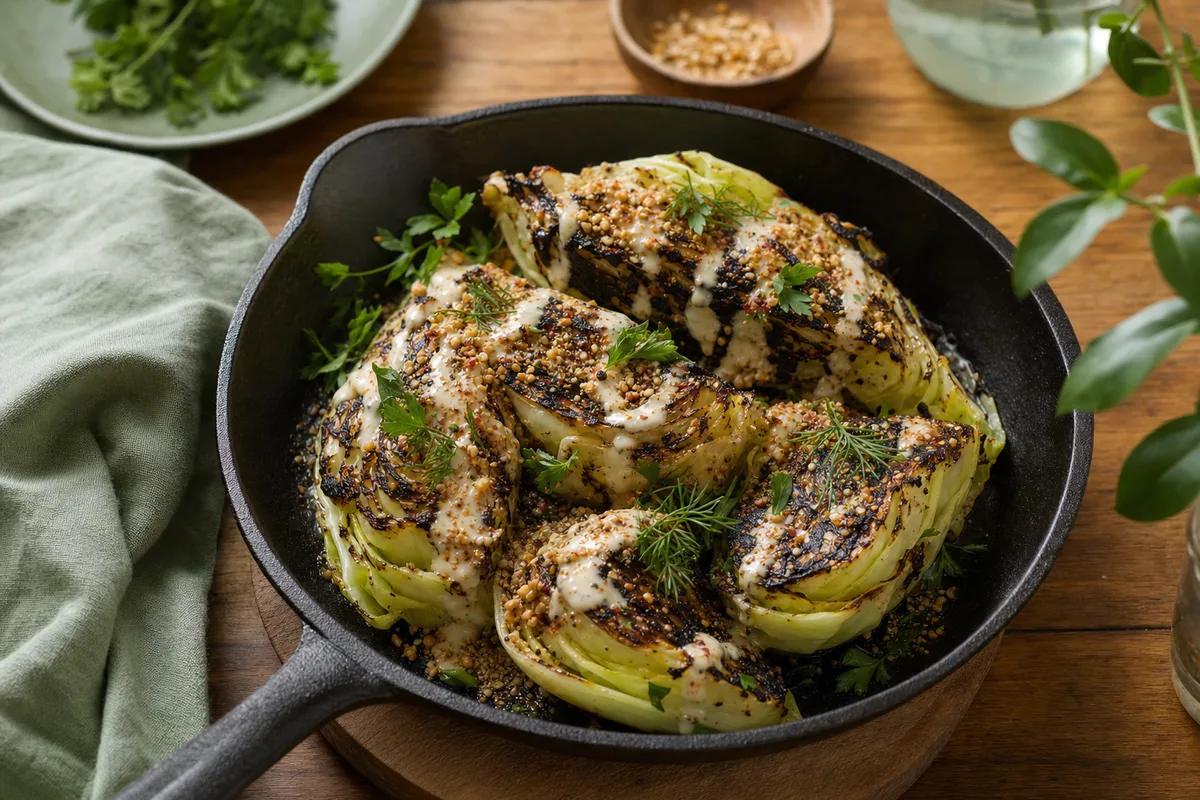
Green cabbage wedges charred in a cast-iron skillet until sweet and smoky, then finished with a creamy tahini-lemon dressing and crunchy dukkah.
Prep: 8 min · Cook: 20 min · Total: 30 min · Serves: 4 · Difficulty: Easy · Rating: 4.7/5 (314 reviews)
INSPIRED BY
Charring vegetables directly on high heat is one of the oldest cooking techniques in the world, used across Middle Eastern, Japanese, and South American traditions to develop smokiness and sweetness that raw or roasted cooking cannot replicate. Cabbage responds to high heat especially well because its natural sugars caramelize dramatically, turning a humble and inexpensive vegetable into something worth ordering at a restaurant.
Story
I grew up eating cabbage one way: boiled soft with corned beef on Saint Patrick's Day, which is the kind of preparation that makes you think you don't like cabbage. A lot of people I know have the same history with it. Cabbage as punishment vegetable. Cabbage as obligation. Then I ate at a diner-style spot in Austin that was doing serious vegetable cookery, the kind of place where a side dish costs as much as an entree somewhere else and nobody minds. They had charred cabbage on the menu. I ordered it mostly as a curiosity, the way you order something weird at a diner to see what they're doing. It came out dark and smoky at the edges, still holding its wedge shape, with a white dressing and something crunchy scattered on top. I ate the whole thing before my main course arrived and then seriously considered ordering another. When I tried to make it at home I made the cast-iron mistake, which is the first mistake everyone makes with high-heat cooking: I put the cabbage in before the pan was truly hot. It sat there and steamed. No char, no caramelization, just pale cooked cabbage with a few sad gray spots. Took the wedges out, cranked the heat, waited a full three minutes until I could hold my hand an inch above the surface and feel genuine heat radiating, then went back in. The sizzle when the cabbage hit the dry pan was loud and mean and exactly right. That's the sound you're waiting for. The tahini dressing is the other half of this dish. It has to be assertive: enough lemon juice to make it bright, enough garlic to have some bite, thinned just enough to pour. Drizzle it on warm cabbage and watch it sink into the charred leaves. That's when it becomes the side dish that makes everyone at the table ask what it is.
By Theo
Ingredients
- 1 medium green cabbage (about 2 lbs), cut into 8 wedges through the core
- 3 tbsp olive oil, divided
- 1 tsp kosher salt
- 3 tbsp tahini
- 3 tbsp fresh lemon juice
- 1 clove garlic, finely grated
- 2 tbsp water (to thin dressing)
- 2 tbsp dukkah or toasted chopped hazelnuts
- 1 tbsp fresh flat-leaf parsley, chopped
- 0.5 tsp red pepper flakes
Instructions
- Whisk together the tahini, lemon juice, grated garlic, and a pinch of salt in a small bowl. Add water one tablespoon at a time until the dressing pours easily. Taste and adjust; it should be bright and nutty. Set aside.
- Cut the cabbage into 8 wedges through the core so the wedges hold together. Brush the cut sides with 2 tablespoons of olive oil and season with salt.
- Heat a large cast-iron skillet over high heat until it is very hot, about 3 minutes. Add 1 tablespoon of oil.
- Place the cabbage wedges cut-side down in the hot skillet (work in batches if needed). Cook undisturbed for 4 to 5 minutes until the bottom is deeply charred and caramelized.
- Flip the wedges to the other cut side and cook for another 3 to 4 minutes. Then lay the wedges on their outer curved side and cook for 2 minutes more to soften the interior.
- Arrange the charred wedges on a serving platter. Drizzle generously with the tahini dressing, scatter the dukkah and parsley over the top, and finish with red pepper flakes. Serve warm.
Chef Tips
- The skillet needs to be legitimately hot before the cabbage goes in. If the pan is not hot enough the cabbage steams rather than chars, and you lose the whole point of the dish. A cast-iron skillet holds heat better than anything else here. When you lay a wedge down and it doesn't sizzle loudly, the pan is not ready. Let it heat another minute and try again.
Cook's Notes
- **Pan temperature:** The cast-iron must be very hot before you add the cabbage; a lukewarm pan steams instead of charring.
- **Keep the core:** Cutting through the core keeps wedges intact during cooking; trim the very base but keep enough core to hold the leaves together.
- **Tahini brands:** Some tahinis are more bitter or thick than others; taste and adjust lemon and water accordingly.
- **Dukkah substitute:** Toasted chopped hazelnuts, walnuts, or toasted panko all add the crunch dukkah provides.
- **Make-ahead:** The dressing keeps in the fridge for up to a week. Char the cabbage just before serving for best texture.
- **Common mistake:** Adding too much liquid to the dressing makes it thin and watery; add water tablespoon by tablespoon.
- **Variation:** Finish with a drizzle of pomegranate molasses alongside the tahini for a sweet-tart contrast.