Cacio e Pepe
Roman spaghetti with Pecorino Romano, Parmesan, and an aggressive amount of freshly cracked black pepper.
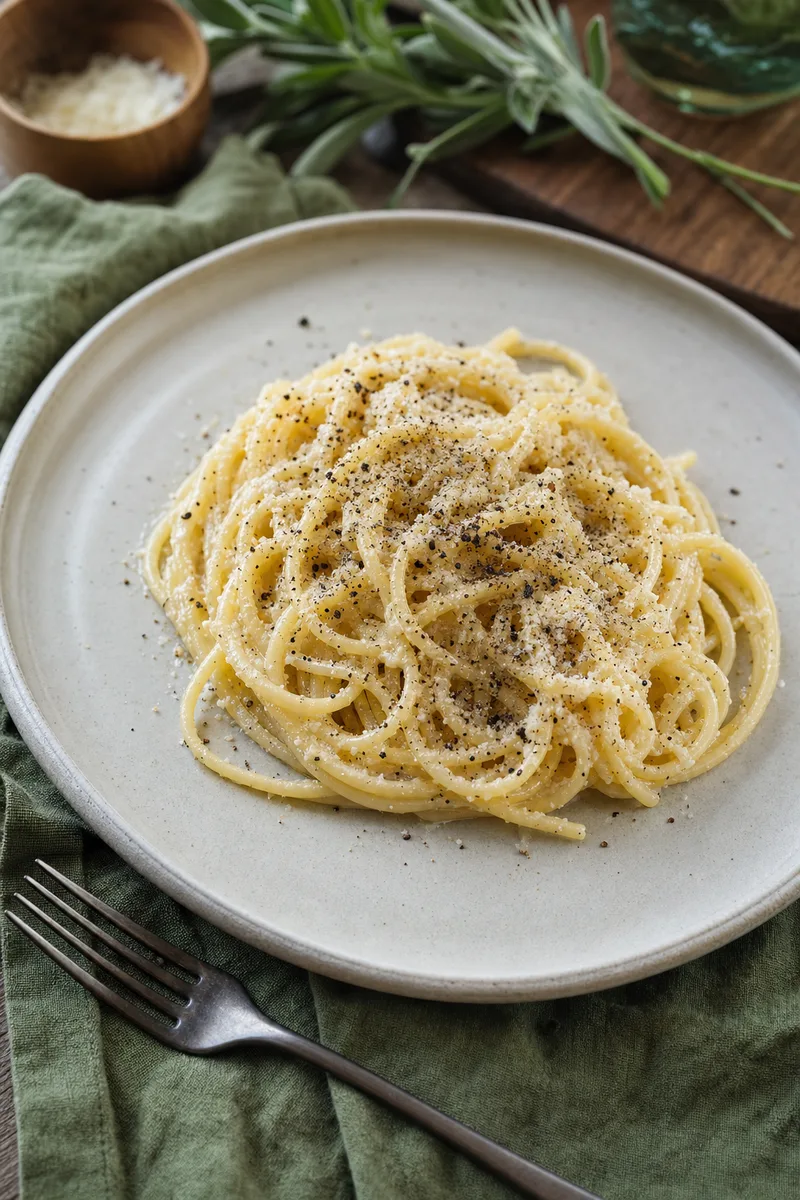
Prep: 5 · Cook: 20 · Total: 25 · Serves: 2 · Difficulty: Medium · Rating: 4.8/5 (634 reviews)
INSPIRED BY
Roman trattorias — Rome, Italy
Cacio e Pepe originated with Roman shepherds who carried shelf-stable provisions: dried pasta, aged Pecorino, and whole black peppercorns. The dish was designed to be cooked over a single fire with no refrigeration, and the elegance of its constraints is what makes it endure.
Story
I spent a long time being intimidated by Cacio e Pepe because I had read too many accounts of people ending up with a bowl of clumpy, greasy cheese strings. Then I started treating it less like a pasta recipe and more like a sauce-making exercise. Once I understood that the pasta water is doing the emulsifying and the cheese just needs to melt gently off the heat, everything clicked. Now it is one of our most-made weeknight dinners. Two servings in under 30 minutes, and the whole family is happy.
By Casey
Ingredients
- 200g spaghetti or tonnarelli
- 80g Pecorino Romano, finely grated (about 1 cup packed)
- 40g Parmigiano-Reggiano, finely grated (about 1/2 cup packed)
- 1.5 tsp whole black peppercorns, coarsely cracked
- Kosher salt, for pasta water
- 1 cup reserved pasta water (or more as needed)
- 1 tbsp extra-virgin olive oil (optional, for extra richness)
- Additional cracked black pepper, for finishing
Instructions
- Bring a large pot of water to a boil. Salt it lightly (less than you would for regular pasta; the Pecorino adds significant salt). Cook the spaghetti until just shy of al dente, about 2 minutes less than the package says.
- While the pasta cooks, toast the cracked black pepper in a large dry skillet over medium heat for 1 to 2 minutes until fragrant. This step wakes up the pepper oils and is the difference between sharp heat and deep, rounded flavor.
- Add about 1/2 cup of the starchy pasta water to the skillet with the toasted pepper. Let it reduce for about 30 seconds.
- Use tongs to transfer the pasta directly from the pot into the skillet (do not drain; a little extra water on the pasta is fine). Toss vigorously over medium-low heat to finish cooking.
- Remove the pan from the heat. Quickly add about two-thirds of the grated cheese while tossing constantly. Add pasta water a splash at a time and keep tossing until the sauce is glossy and clings to every strand.
- Divide between warm bowls. Top with the remaining cheese and another crack of fresh pepper. Serve immediately.
Chef Tips
- Grate the cheese on a microplane so it is as fine as possible. Coarsely grated Pecorino will clump instead of melting smoothly.
- Reserve at least a full cup of pasta water before draining. You will likely use more than you expect.
- The pan must be off the heat when you add the cheese, otherwise it scrambles.
- Use a wide, low-sided pan to give yourself room to toss aggressively. A saucepan makes this much harder.
Cook's Notes
- **Cheese temperature:** Cold cheese straight from the fridge is actually fine here. The residual heat of the pasta melts it gently. What matters is the temperature of the pan: it must be off direct heat when you add the cheese.
- **Tonnarelli vs. spaghetti:** Tonnarelli is the traditional Roman choice, a square-cut egg spaghetti that grips the sauce beautifully. Regular spaghetti is a perfectly worthy substitute and is much easier to find.
- **Pepper grinding:** Buy whole black peppercorns and crack them coarsely in a mortar or under the flat of a heavy pan. Pre-ground pepper loses its volatile oils quickly and will not give you the same aromatic punch.