Beef Chow Fung
Wide silky rice noodles wok-tossed with tender beef, scallions, and smoky wok breath in a savory soy-oyster sauce.
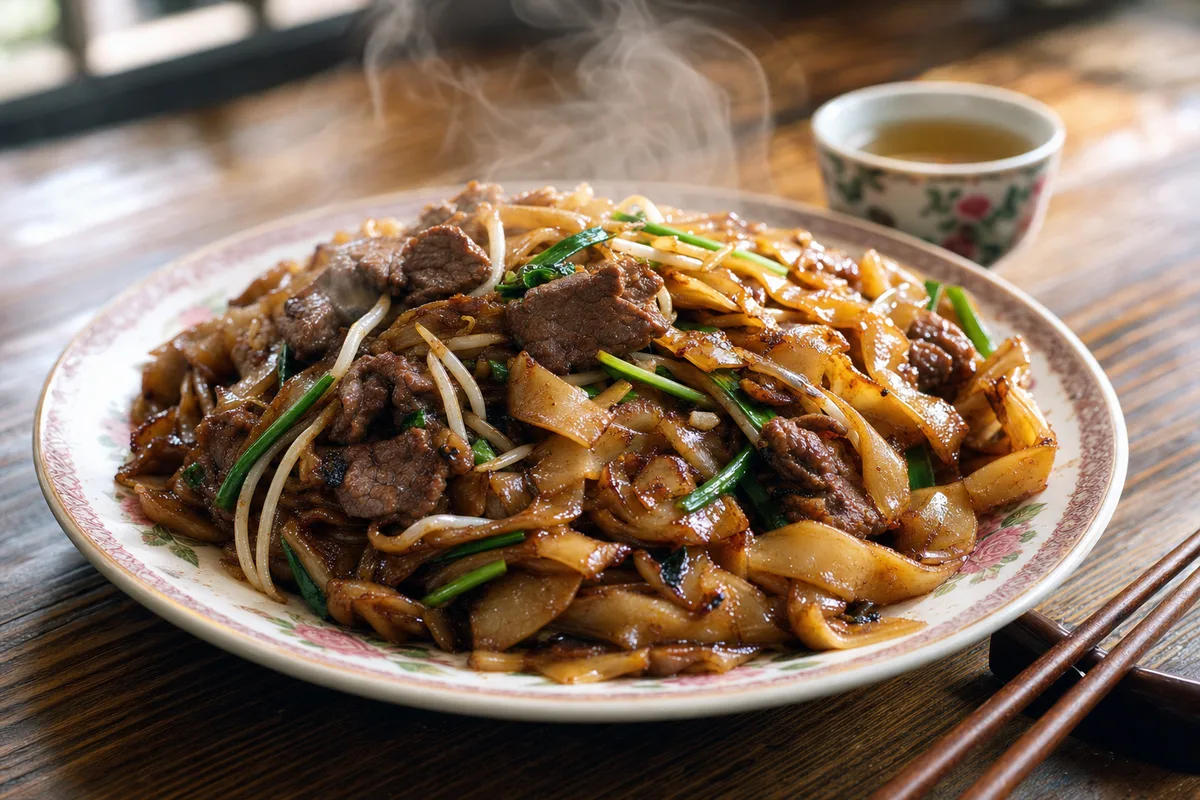
Prep: 20 min · Cook: 15 min · Total: 35 min · Serves: 4 · Difficulty: Medium · Rating: 4.8/5 (162 reviews)
INSPIRED BY
Sun Wah BBQ — Chicago, IL
Inspired by Sun Wah BBQ on Chicago's North Side, a legendary Cantonese BBQ house where the Beef Chow Fung is made with decades of wok experience.
Story
I stood near the kitchen pass at Sun Wah BBQ on Chicago's North Side and watched a cook make beef chow fung in under three minutes over a wok burner that sounded like a jet engine, and the thing I remember most is the flame licking up the side of the wok every time he tossed it. The noodles came out with dark char marks and a smell I couldn't place at first and then recognized as wok hei, the slightly scorched, smoky perfume you only get from screaming-hot metal. Wide, silky rice noodles, tender beef, scallions barely wilted. It looked effortless. It is not. Here's the gap between the restaurant and your kitchen: the wok burner. A home stove cannot match that BTU output, which is why home chow fung usually comes out pale and soft instead of charred. The fix is to cook in small batches, get your pan as hot as it will physically go, and leave the noodles alone once they hit the surface. Let them sit undisturbed for sixty to ninety seconds so they actually char before you flip them. Stirring constantly is how you steam noodles into mush. The beef needs velveting, and this is the trick most people skip. Toss the sliced flank with baking soda, let it sit twenty minutes, then rinse it well. The baking soda raises the pH and keeps the protein from tightening, so thin beef stays tender instead of going tough in the heat. A coat of cornstarch after seals in the juices. Separate the rice noodles gently with your hands; a thirty-second zap in the microwave loosens cold ones. If a few tear, let them tear. Plate the second it's done. Chow fung waits for no one, and a chow fung that's been sitting has lost the only thing that made it worth the heat. Use fresh wide rice noodles if you can find them, the kind sold in a soft slab at an Asian grocery, and bring them to room temperature before cooking; cold noodles straight from the fridge are stiff and tear into shards the second you touch them. A carbon steel wok beats nonstick every time here, because nonstick can't take the heat you need and won't give you the char. Layer your sauce so the dark soy does the coloring and the regular soy and oyster sauce do the seasoning. And taste at the end. A chow fung that's under-seasoned tastes like plain noodles wearing a costume.
By Theo
Ingredients
- 1 lb fresh wide rice noodles (ho fun)
- 0.75 lb flank steak, thinly sliced against grain
- 1 tbsp baking soda (for tenderizing beef)
- 4 scallions, cut into 2-inch pieces
- 2 cups mung bean sprouts
- 3 tbsp soy sauce
- 2 tbsp oyster sauce
- 1 tbsp dark soy sauce
- 1 tsp sesame oil
- 1 tsp sugar
- 2 tbsp Shaoxing rice wine
- 3 tbsp neutral oil (peanut or vegetable)
- 1 tsp cornstarch
Instructions
- Velvet the beef: toss sliced flank steak with baking soda and 1 tbsp soy sauce. Let sit 20 minutes, then rinse thoroughly with cold water and pat dry. This step makes the beef impossibly tender. Toss with cornstarch and a drizzle of oil.
- Mix the sauce: combine remaining soy sauce, oyster sauce, dark soy sauce, sesame oil, sugar, and Shaoxing wine in a small bowl. Set aside.
- Separate the rice noodles carefully with your hands. If using refrigerated noodles, microwave them for 30 seconds to soften before separating. Tearing them is not the end of the world — they'll still taste incredible.
- Heat a wok over the highest heat possible until smoking. Add 2 tbsp neutral oil. When shimmering, add the beef in a single layer. Let it sear untouched for 90 seconds until a crust forms, then stir-fry 1 more minute until just cooked. Remove beef and set aside.
- Add remaining oil to the wok. Add noodles and spread them out. Let them sit undisturbed for 60–90 seconds — this is where you build the char and wok hei. Flip sections and let them char on the other side.
- Pour sauce over noodles and toss quickly to coat. Add beef back to the wok, add scallions and bean sprouts, and toss everything together for 1–2 minutes until the scallions just wilt. Taste and adjust seasoning.
- Plate immediately. Beef Chow Fung waits for no one — serve it straight from the wok while the noodles are still sizzling.
Chef Tips
- Wok hei — the smoky char — only happens at temperatures most home stoves struggle to reach. Use your largest burner at full blast, preheat the wok until it smokes, and don't crowd it.
- The baking soda velvet trick is the difference between chewy and silky beef. Don't skip it, don't shorten it, and rinse thoroughly or the beef will taste metallic.
- Fresh wide rice noodles are non-negotiable for this dish. Dried noodles will never achieve the same silkiness. Find them at any Asian grocery store.
- Work in batches if your wok isn't large enough. Crowding the wok drops the temperature and you'll get steamed noodles instead of charred ones.
Cook's Notes
- **Noodle substitute:** Dried wide rice noodles (soaked per package directions) work if fresh ho fun isn't available. The texture is chewier, not as silky, but acceptable.
- **Beef substitute:** Flank steak is traditional, but sirloin or skirt steak velvet equally well. Slice against the grain at a 45-degree angle for the thinnest possible pieces.
- **Make-ahead:** The velveted beef can be prepped up to 8 hours ahead. Keep refrigerated after rinsing and drying.
- **Equipment:** A proper carbon-steel wok on a high-BTU burner matters here more than in most stir-fries. The wok hei (charred breath) is half the dish. A large cast-iron skillet over maximum stovetop heat is the home-kitchen fallback.
- **Common mistake:** Overcrowding the wok. Cook beef in a single layer with space around each piece — if you pile it in, the meat steams and turns gray instead of searing.
- **Doneness cue:** The noodles should have visible char spots on both sides and smell slightly smoky. If they're just softened without color, the heat isn't high enough.
- **Wok hei tip:** Let the noodles sit undisturbed for 60-90 seconds per side before tossing. Patience here is the entire difference between restaurant-quality and home-cooked.