Amatriciana Pasta
Classic Roman pasta with guanciale, San Marzano tomatoes, and pecorino Romano.
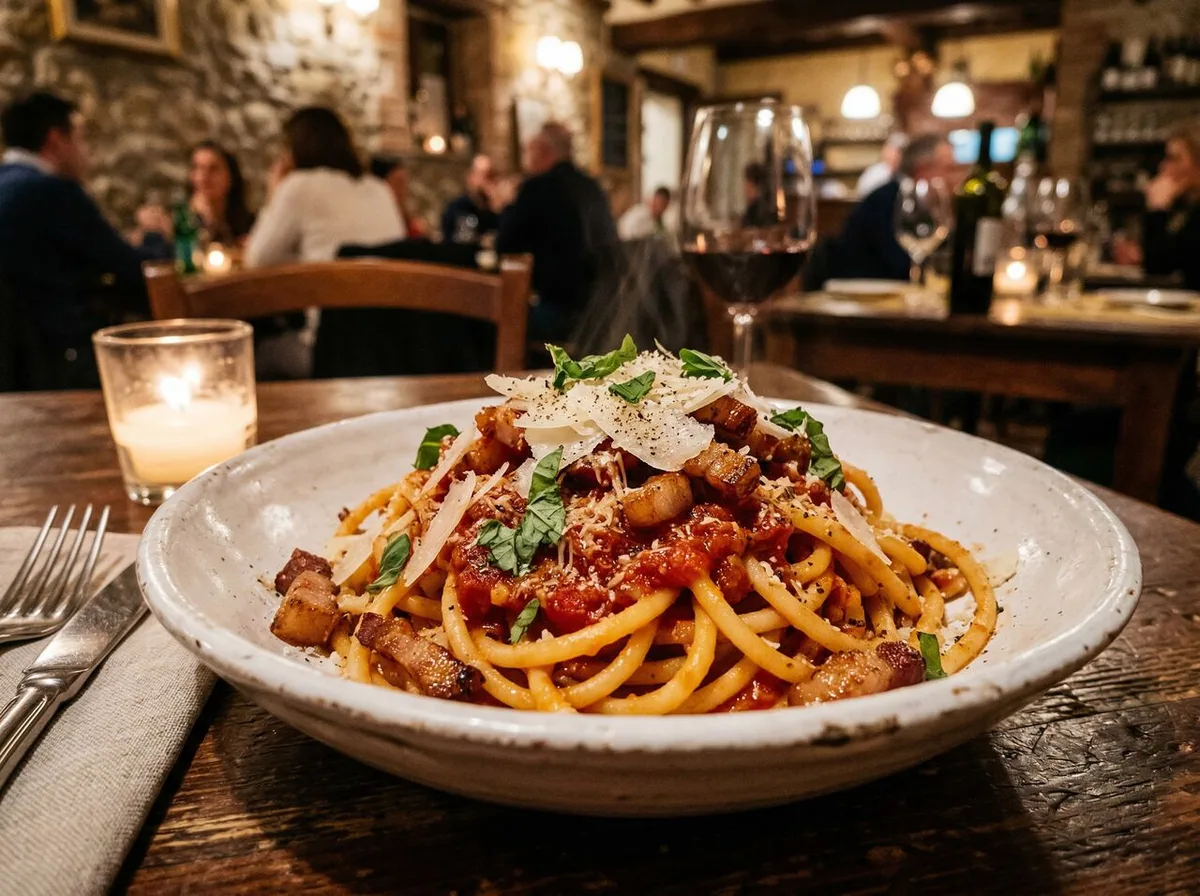
Prep: 10 min · Cook: 25 min · Total: 35 min · Serves: 4 · Difficulty: Easy · Rating: 5/5 (763 reviews)
INSPIRED BY
Featured on Diners, Drive-Ins & Dives
From DDD's Italian episodes — this is one of Rome's four legendary pastas. Simple ingredients, technique-driven perfection.
Story
There is a genuine, ongoing, occasionally heated argument in Italy about whether onion belongs in an amatriciana, and I've watched it play out in person, at a trattoria table in Rome where two men spent ten minutes on it before their plates even arrived. The town of Amatrice, where the dish is named for, issued an official recipe and it does not include onion. The Roman version often sneaks some in. I've made it both ways. I leave the onion out, and I'll tell you why in a second. Amatriciana is one of the four pillars of Roman pasta, alongside carbonara, cacio e pepe, and gricia, and like all four it's built on guanciale, cured pork jowl. Not pancetta, not bacon. Guanciale renders into a silky fat with a funk that pancetta can't reproduce, and that fat is the base of the sauce. Render it slowly from a cold pan so it gives up its fat without burning, and pull the crisped pieces out before they turn to leather. The emulsion is where home cooks fall down. You can't just dump grated pecorino into a hot pan or it seizes into a clump. Pull the pan off the heat, add a splash of starchy pasta water, and toss the cheese in while tossing the pasta hard, so the fat and water and cheese come together into something glossy that clings to every strand of bucatini. The onion question: onion adds sweetness and bulk, but it muddies the clean punch of pork, tomato, and sharp pecorino. The dish is supposed to be lean and direct. Leave the onion out, crush the San Marzanos by hand so you get texture, and don't drown it in tomato. It's a pork dish wearing a little tomato, not the reverse. Bucatini is the traditional shape, those thick hollow strands that the sauce clings to and that whip you in the face if you're not careful, but rigatoni works and is easier to eat. Cook the pasta a full minute short of al dente and finish it in the sauce with a ladle of pasta water, because that last minute of cooking in the tomato is when the noodle drinks up flavor and the dish becomes one thing instead of two. Salt the pasta water like the sea. The pecorino is salty and the guanciale is salty, so taste before you add any more at the end.
By Theo
Ingredients
- 1 lb bucatini or rigatoni
- 8 oz guanciale, cut into strips
- 1 can San Marzano tomatoes (28oz), crushed by hand
- 1 cup pecorino Romano, finely grated
- 1 tsp red pepper flakes
- 1/2 cup dry white wine
Instructions
- Cook guanciale strips in a cold pan over medium heat until fat renders and meat is crispy, about 8 minutes.
- Remove guanciale. Add red pepper flakes to the rendered fat.
- Deglaze with white wine. Add hand-crushed San Marzano tomatoes. Simmer 15-20 minutes.
- Cook bucatini in salted water until 1 minute short of al dente. Reserve 1 cup pasta water.
- Add pasta to the sauce with a splash of pasta water. Toss vigorously for 1-2 minutes to emulsify.
- Remove from heat. Add pecorino Romano and crispy guanciale. Toss until creamy. Serve with more pecorino.
Chef Tips
- Guanciale is non-negotiable for authentic amatriciana — it's cured pork jowl and its rendered fat is the flavor base. If you can't find it, thick-cut pancetta is an acceptable substitute, but never bacon.
Cook's Notes
- **Guanciale substitute:** Pancetta is the closest swap — same cured pork family, similar fat ratio. Bacon works but adds a smoky note that's not traditional.
- **San Marzano substitute:** Any whole peeled canned tomato crushed by hand. Avoid pre-diced canned tomatoes — the added calcium chloride keeps them from breaking down properly.
- **Make-ahead:** The tomato-guanciale sauce holds refrigerated for 3 days. Don't add pecorino until serving; it clumps when reheated.
- **Storage:** Leftovers keep 3 days in the fridge. Reheat in a skillet with a splash of water over medium heat, tossing constantly.
- **Pasta water:** Reserve at least 1 cup before draining. The starchy water is what makes the sauce cling and turn creamy rather than watery.
- **Common mistake:** Adding pecorino over heat. Take the pan off the burner before adding the cheese or it will seize into rubbery clumps instead of melting into a glossy sauce.
- **Doneness cue:** The sauce should coat a spoon but still have visible tomato texture. If it's completely smooth, it's been cooked too long.